icostamp.com First Idea to Steady Profit

Maxime Dupré
8/3/2026
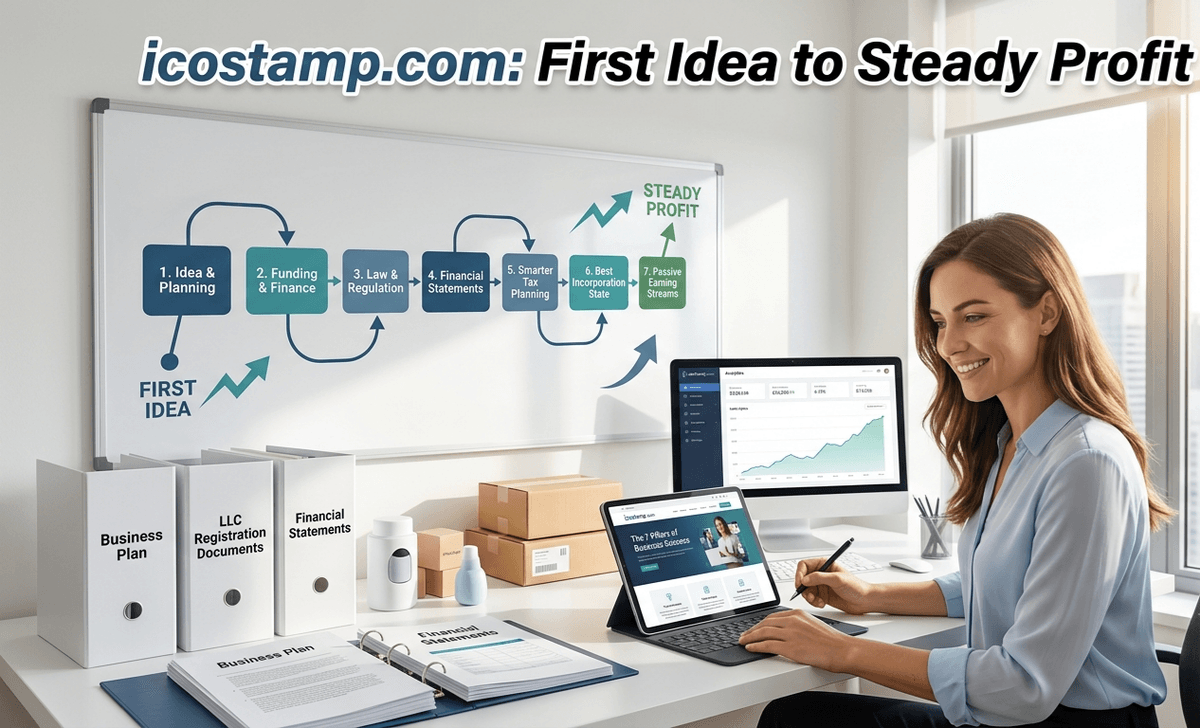
Balance sheets, LLC filings and tax deadlines stop more founders than the actual work does. Sarah had a working idea for an online store and still lost months to paperwork. She found icostamp.com, wrote her plan, registered the company, then made her first sales within a few weeks. The site pulls that whole path into seven connected pillars.
What icostamp.com Offers Beyond a Standard Business Blog
Working business professionals built icostamp.com as a curated hub rather than a running blog. Everything sits inside seven linked pillars.
The stated aim is financial literacy and clear strategy, so numbers, laws and plans stop being guesswork.
Guides cover corporate structure, tax savings, complete business plans, corporate tax planning and the best states to incorporate. Each one leans on steps you can run this week instead of theory.
Financial Literacy Guides on icostamp.com: Balance Sheets, P&L and Forecasts
Start with the beginner walkthroughs. The step-by-step balance sheet guide shows what you own, what you owe and what stays yours, using samples you can copy straight into your own file.
The profit and loss breakdown covers revenue sources, spending and take-home profit in ordinary words. Forecasts come next, so climbing costs or slowing orders show up before they hurt.
Three quick tasks. Turn last month’s figures into a rough balance sheet. List your largest outgoings on a P&L and cut the waste. Project next quarter from the trend line.
Founders who want tighter money habits outside the business can pair this with budgeting and debt reduction methods. Wave or QuickBooks handles the weekly logging, and reporting tools that automate the analysis take over once volume grows.
LLC Registration for Non-Residents Explained on icostamp.com
The non-resident LLC walkthrough runs from getting an EIN to lodging state papers. It names each document and the usual waiting time.
A correct structure guards your personal property, trims tax and opens business banking. Owners abroad avoid being taxed twice and look credible sooner.
An LLC also stays flexible. Partners can join later, and profit lands on your personal return. Pair the filing guide with low-effort earning ideas such as digital goods or rental property held inside the company.
The Seven Pillars of Business Success on icostamp.com
Idea choice and planning
Funding and finance fundamentals
Law and regulation
Financial statements
Smarter tax planning
Best incorporation state
Passive earning streams
Each block rests on the one below it. A shaky idea topples the stack, thin funding stalls you, and skipping the legal step brings trouble later.
Pillars One to Three: Idea, Funding and Legal Setup
Match what you enjoy with what pays. Keen on fitness? Serve office workers who want short home sessions. Then prove demand. Interview twenty likely buyers, run a Google Forms survey, read rival complaints on Reddit or check Google Trends.
Selling eco bags? Buyers dislike plastic waste and steep prices, so the niche answers both. The business plan template asks for market size, revenue model and targets. Companies that test demand early reach profit 40% quicker.
Self-funding keeps control but grows slowly. Angels and venture capital bring cash and mentoring at the cost of shares. Either route needs projections with a break-even point and a three-year outlook.
On law, an LLC gives flexibility while an S-Corp trims self-employment tax once profit appears. Permits follow the trade. A food truck needs health clearance, an online store needs sales tax registration, and sellers moving into social commerce should read the TikTok Shop registration requirements.
Register the brand name through USPTO. Use contracts that state scope and payment terms. File with your state for $50 to $500, open a company bank account, then buy liability cover.
Pillars Four to Six: Operations, Hiring and Marketing
Reliable vendors, bulk pricing and shipment tracking in a shared sheet cut delays 25%. Sort stock by value with ABC grading and let inventory software flag low levels.
One cafe owner ordered weekly from sales data and cut stock costs 40%. A gadget startup moved to regional suppliers with RFID tags, halved delivery time and lifted profit 20%. Checklists and sample testing dropped one clothing label’s returns 15%.
Hire through Indeed or LinkedIn, screen with skill tests, and ask how candidates handled past deadlines. Weekly targets and one-to-ones keep people sharp.
Cross-training plus cheap online courses raised one retail chain’s shift sales 18%. Teams that need engineers faster than they can recruit often use agencies supplying dedicated development teams. Write policies on pay, harassment and remote work.
For sales, chase buying keywords, bid small on ads and post daily. A bakery’s recipe reels drew 10,000 followers and doubled foot traffic. Weekly newsletters and simple graphics helped one coach convert 12% of readers.
Answer price objections, follow up twice, and closes climb 25%. Split-test adverts and read returns in analytics. Stores stuck below their traffic potential sometimes bring in a conversion agency that stands behind its numbers. Getting these three pillars right adds roughly 30% to first-year margins.
Pillar Seven: Passive Income Streams That Tie the System Together
Treat the company as an engine. One faulty part stops the car. Good hiring lowers operating errors, tax planning frees the cash you raised, and legal cover protects growing sales.
A dropshipper moves from idea to LLC, ties stock levels to marketing spend, then checks weekly whether forecasts match orders. One owner trimmed waste 30% doing exactly that.
Digital products, courses and rentals pay best when they sit on assets you control, which is why owning your own site and email list beats renting attention on one platform. Anyone pricing a social channel as an income stream can sanity-check it with a creator payout estimator first.
Who Runs icostamp.com
Finance people who ran multimillion-dollar firms. Lawyers who filed over 500 LLCs for overseas owners. Operations staff from large ecommerce names.
Together they hold more than 20 years of practice and lived through the same startup headaches. One founder said tying his P&L to LLC tax saved $5,000 in year one.
How to Start Using icostamp.com This Week
The templates and guides cost nothing. Map the seven pillars on paper, mark your gaps, test one link between two of them, then record the change in a simple sheet.
Sarah did that and turned a side project into regular income. Pick one topic today, the plan or the tax setup, and act on it.
FAQs
Is icostamp.com free to use?
Yes. The guides, templates and checklists cost nothing. Balance sheet, P&L, business plan and LLC material sit outside any paywall, and no signup is required to read them.
Can non-residents register a US LLC using these guides?
Yes. The non-resident walkthrough covers EIN applications, registered agents, state filings and typical processing times, plus the banking steps for owners without a US address.
What are the seven pillars on icostamp.com?
Idea and planning, funding, law and regulation, financial statements, tax planning, incorporation state, and passive income. Each pillar depends on the one before it.
Which state is best for incorporating?
It depends on fees, privacy rules and where you trade. Delaware, Wyoming and Nevada suit different models, so compare filing costs and annual requirements before choosing.
Do I still need an accountant after reading these guides?
For a simple single-owner setup, often no. Once payroll, several states or foreign income enter the picture, the tax planning guide points you toward a licensed accountant.