What Your TikTok Profile Gives Away A Privacy Playbook for Creators Who Post Their Whole Life

Maxime Dupré
7/24/2026
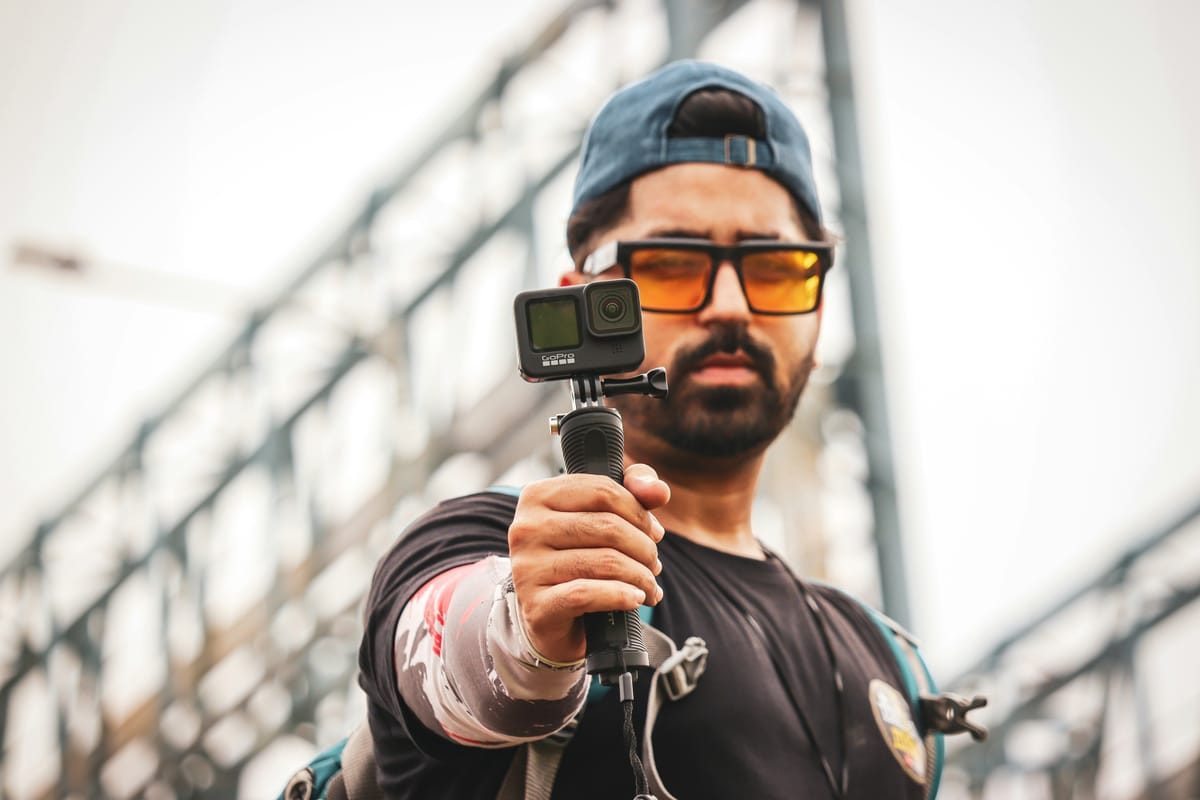
Growing an audience means showing up. You film in your kitchen, walk the same route to the same coffee shop, tag the gym you train at, and over a few hundred videos your followers learn your city, your routine, and roughly where you sleep at night. None of it feels like oversharing in the moment. Stacked together, it turns into a map.
That is the trade every creator makes without really noticing. The reach you want and the privacy you would like to keep pull in opposite directions, and the platform’s default settings are tuned for reach. This piece is about keeping the visibility that grows your channel while cutting the exposure that comes with it.
The two kinds of data you leak
There are two separate problems here, and creators tend to only think about the first.
The visible layer is what you put in frame and in captions: the street sign behind you, the school logo on a hoodie, a package with your address on the label, a geotag on a “day in my life” post. Anyone watching can piece these together. The invisible layer is what the platform itself records: precise location, device details, your contacts if you synced them, and a behavioral profile built from everything you watch and how long you linger on it.
That second layer is bigger than most people assume. A VPNOverview analysis of social media apps found that up to 68 percent of them harvest user data for marketing, and the VPNOverview team pointed out that a large share of apps also pass information to third parties rather than keeping it in-house. For a creator posting daily, that is a lot of signal leaving your control every time you open the app.
Where the exposure adds up
The risky sources are rarely the obvious ones, so it is worth laying them out together.
| Source of exposure | What it can reveal | What to do about it |
|---|---|---|
| Geotags and location stickers | Home, gym, workplace, daily route | Post location after you leave, or skip it |
| Background details on camera | Street names, plates, mail, school logos | Scan the frame before publishing |
| Precise location permission | Your exact position in real time | Turn location services off for the app |
| Contact syncing | Your entire phone book, exposed | Disable contact sync in settings |
| “Day in my life” routines | Predictable schedule and patterns | Vary what you show, delay real-time posts |
| Ad personalization | A detailed behavioral profile | Switch off personalized ads |
Since splitting from its former parent company in early 2026, TikTok updated its privacy policy to allow collection of precise GPS location when location services are switched on, where earlier versions did not pull exact GPS from users. That one change makes the location row above worth acting on now rather than later.
Locking it down without going invisible
You do not have to choose between growth and safety. A creator can stay fully public and still close the worst gaps, because the fixes target exposure, not reach. Set your posting habit so real-time location never goes out live. Kill contact sync and precise-location permission in settings. Turn off ad personalization so you stop feeding that behavioral profile. And get into the routine of scanning each frame for anything that gives away where you are before it publishes.
For the exact tap-by-tap steps, New Jersey’s state cybersecurity team keeps a plain guide to TikTok’s privacy settings that walks through each toggle. It is also worth studying how the creators who scale safely handle this. Several of the names in this rundown of top TikTok gaming creators built huge followings while keeping their home life and real-time location almost entirely off camera.
Your content is meant to be public. Your address, your schedule, and your phone book are not. Keep those on opposite sides of that line and you can grow as big an audience as you want.