Unlocking Global Audio Platforms Without Geographic Constraints

Maxime Dupré
7/24/2026
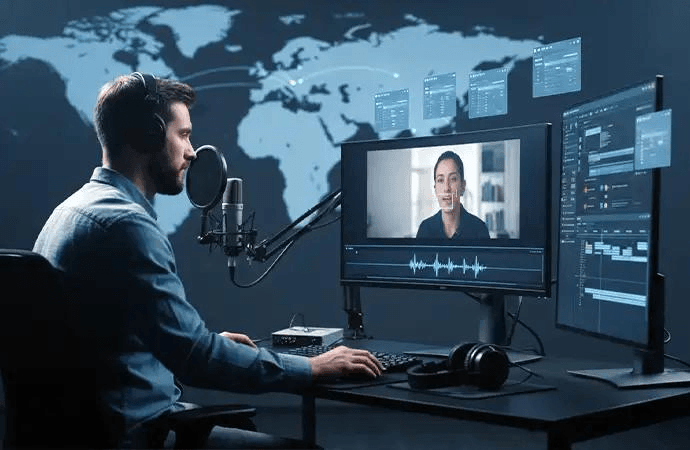
The Borderless Content Paradox
Media production professionals operate within a theoretical landscape of borderless digital innovation. However, the practical reality of accessing cutting-edge audio synthesis and voice generation technology is frequently hindered by rigid national telecommunications grids. Software developers frequently release their most advanced text-to-speech engines or voice cloning algorithms exclusively within specific geographic regions. These phased rollouts rely heavily on local cellular network authentication to manage regional access. When a producer located in Europe attempts to utilize an audio tool launched exclusively in the Asian market, they immediately encounter an insurmountable registration blockade. Resolving this cross-border friction requires specialized logistical solutions. Decision-makers often buy a number for SMS verification to establish a localized digital presence within the target region. This deliberate structural configuration grants immediate entry to regional software ecosystems. The objective shifts from merely safeguarding information to actively navigating arbitrary regional limitations that stifle creative workflows.
The Mechanics of Geographic Software Licensing
Understanding the necessity for localized authentication requires examining the intricate nature of global software licensing. Technology firms do not restrict access out of malice. The rollout of advanced neural networks demands massive computational resources. By limiting beta tests to specific countries, engineers can carefully monitor server loads and optimize algorithms before orchestrating a global launch. Furthermore, linguistic models are often trained on regional dialects, making localized testing a technical necessity.
These corporate strategies inadvertently paralyze international media studios. A documentary filmmaker requiring a highly specific regional accent for an automated narration track cannot simply wait for a global software release. The production schedule demands immediate access. Organizations like the International Telecommunication Union continuously document the complexities of international digital access and the fragmented nature of global connectivity frameworks. Because software platforms utilize cellular prefixes to verify geographic location, connecting to these platforms internationally requires operating outside the traditional, localized carrier network. By utilizing cloud-based communication routing, media professionals effectively detach their geographic physical location from their digital point of entry.
Orchestrating International Localization Workflows
Creating content for a global audience necessitates an expansive array of localized profiles. A media conglomerate managing a brand presence across multiple continents must operate independent accounts on region-specific social networks and audio distribution platforms. Attempting to manage an entire international portfolio using a single, centrally located corporate credential triggers automated security verification protocols. Platforms correctly identify the mismatch between a domestic registration credential and continuous international login attempts.
The architectural solution involves assigning distinct, region-specific communication channels to each international project. If a production team launches a podcast targeted exclusively at the Latin American market, they must utilize tools and platforms dominant in that specific demographic. Establishing a dedicated, localized point of contact for that specific project ensures seamless integration with regional aggregators and marketing platforms. This method prevents cross-contamination between different international campaigns. The infrastructure remains organized, distinct, and resilient against automated account locks triggered by anomalous cross-border activity.
Safeguarding Proprietary Audio Scripts
Working with international, region-restricted software introduces unique considerations regarding intellectual property. When utilizing an overseas text-to-speech generator, producers must upload proprietary scripts and unreleased narrative concepts to foreign servers. Operating through a localized, cloud-based access point adds an essential layer of privacy to this process.
If a studio utilizes their primary corporate identity to register for an experimental foreign audio tool, they inadvertently link their highly valuable intellectual property directly to their central corporate infrastructure. By establishing an independent, region-specific access channel, the studio creates a manageable boundary. The script is processed by the algorithm, the audio file is generated and retrieved, and the localized channel can be subsequently decommissioned if the platform’s long-term utility wanes. The foreign vendor processes the text without linking the activity directly to the primary parent studio. This abstraction protects upcoming project details from premature public disclosure and unauthorized data access during the most vulnerable phases of post-production.
Navigating Telecom Grid Incompatibilities
The physical limitations of global telecommunications networks create persistent hurdles for international creators. Traditional cellular carriers negotiate complex roaming agreements that frequently fail when interacting with automated short message service gateways. A producer attempting to receive an automated authorization payload from a foreign software vendor via a traditional mobile device often experiences silent delivery failures. The message simply vanishes within the routing infrastructure between different national carriers.
Cloud infrastructure entirely eliminates this physical incompatibility. Instead of relying on fragile international roaming agreements, the authentication payload is routed directly through optimized internet protocols. This ensures instantaneous delivery regardless of the physical distance between the software vendor and the media producer. This technical reliability is paramount when managing tight production deadlines. Audio engineers cannot afford to pause a rendering pipeline while waiting for an authorization token to navigate a congested international telecom bottleneck.
Managing Distributed Production Teams
Modern audio production rarely occurs in a single physical studio. Sound designers, scriptwriters, and localization experts operate across multiple time zones. Collaborative access to specialized tools becomes a logistical challenge when authentication is tied to a single physical device located in a specific country. If the lead engineer holds the only device capable of receiving the platform login token, the entire distributed team suffers severe workflow interruptions whenever that engineer is unavailable.
Transitioning to cloud-based access channels transforms authentication into a highly manageable, collaborative resource. The incoming payloads can be securely routed to an internal company dashboard accessible by authorized personnel worldwide. A sound designer in one hemisphere can initiate a render on a regional platform, while a producer in another hemisphere seamlessly processes the required access token. This decoupling of authentication from physical hardware democratizes access within the organization. It enables a continuous, uninterrupted production cycle that operates independent of geographic constraints or individual availability.
Future-Proofing the Synthesis Pipeline
The landscape of synthetic media and artificial intelligence audio generation evolves at an unprecedented velocity. The tools that dominate the industry today may be obsolete entirely within a few development cycles. Consequently, maintaining absolute agility in tool procurement is a critical asset for any modern media organization. Being unable to access a revolutionary new platform simply due to the physical location of a corporate headquarters represents an unnecessary operational limitation.
By integrating localized, independent access methodologies into the foundation of their infrastructure, production studios ensure reliable access to the global software market. They transform arbitrary national boundaries into manageable digital workflows. This proactive architectural design ensures that creators can seamlessly procure, evaluate, and deploy the most advanced audio technologies available worldwide. Mastering this form of digital logistics is an essential prerequisite for maintaining a competitive edge in the rapidly expanding universe of synthetic media.