Professional Voiceovers Made Simple Best Text-to-Speech and Cloning Tools

Maxime Dupré
7/15/2026
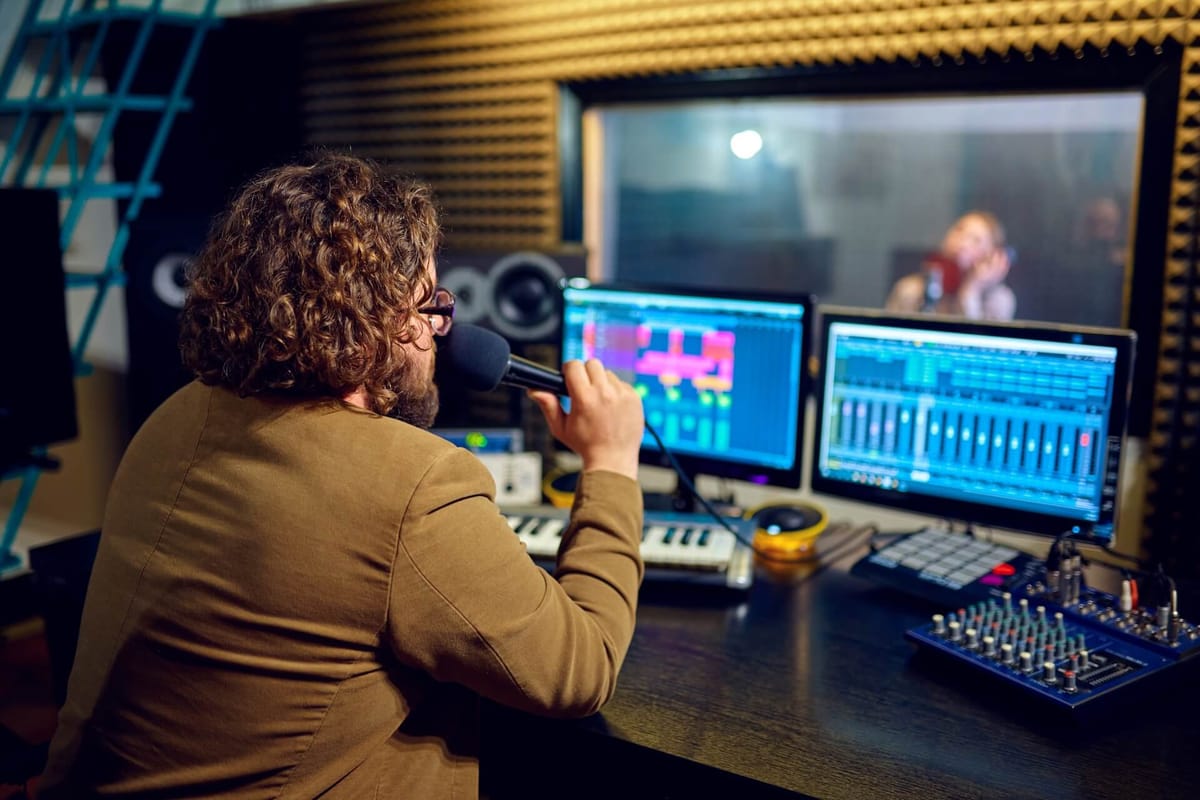
In 2026, it is no secret that AI has made professional voiceover accessible to almost anyone with a script and an internet connection. What is less obvious is how differently the leading tools approach the problem. And, importantly, how much that matters once you factor in voice cloning rights, long-form consistency, multilingual accuracy, and commercial licensing.
The gap between these platforms and a human-quality recording has narrowed to the point where the decision is rarely about whether the audio sounds good enough. It is about which tool fits the workflow, covers the use case, and does not create a licensing headache six months later. Here is how four of the leading platforms compare.
ElevenLabs
ElevenLabs is widely regarded as the gold standard for realistic AI voice generation, delivering natural-sounding speech with strong emotional range across more than 30 languages. Its Instant Voice Cloning requires as little as 60 seconds of clean audio.
On the other hand, Professional Voice Cloning (requiring 30-plus minutes of audio) produces results most listeners cannot distinguish from the original speaker. The platform also handles AI dubbing for video across 29 languages and text-to-speech generation at scale via a well-documented API.
The free tier offers 10,000 characters monthly but excludes commercial rights entirely. Starter starts at $6/month and unlocks commercial use and instant voice cloning. Moreover, the Professional Voice Cloning feature is available in the Creator pack, which starts at $22/month (50% off in the first month).
Pros
- Best-in-class vocal realism and emotional range
- Voice cloning from as little as 60 seconds of audio
- Robust API for programmatic and real-time generation
Cons
- Terms of service grant ElevenLabs a “perpetual, irrevocable, royalty-free” licence over uploaded voice data
- Free tier has no commercial rights; credits don’t roll over monthly
- Multilingual performance trails English quality noticeably
Murf AI
Murf prioritizes team workflows, offering shared voice libraries, collaboration features, and integrations with tools like PowerPoint and Canva. Its interface is deliberately simple, reducing onboarding time for non-technical team members, and its voice library spans 200-plus stock voices across 20-plus languages.
Murf’s Falcon model, released in November 2025, delivers 55ms latency across 33 global regions. Similarly, its Gen 2 model achieves 99.38% pronunciation accuracy.
The free tier offers just 10 mins of voice generation and also doesn’t offer any commercial rights. For true commercial usage and useworthy features, the Business and Enterprise plans are preferable, which starts at $66/month.
Pros
- Team-friendly with shared workspaces and role-based permissions
- Strong pronunciation accuracy and low latency on Falcon model
- SOC 2, ISO 27001, HIPAA, and GDPR certified providing enterprise-grade security
Cons
- Voice cloning locked behind enterprise pricing only
- Hard monthly cap on generation minutes with no rollover
- Free tier allows no downloads or commercial use
Descript
Descript shines when you need voice cloning built directly into a video and podcast editor. Its “edit-by-text” workflow lets you edit audio by editing a transcript and Overdub synthesizes a seamless fix in your cloned voice.
The voice clone trains on 10-plus minutes of audio and captures enough variation to handle new phrases naturally. Descript is also noted for its strong consent-verification system, making it one of the more responsible platforms for voice cloning use.
The Hobbyist plan starts at $16/month and goes all the way up to $50/month/person for the Business plan. For professionals tight on budget, the Creator plan is best-suited at $24/month/person and includes full AI Speech access and commercial rights.
Pros
- Voice cloning integrated directly into a full video and podcast editor
- Best consent-verification system of any platform in this comparison
- Bundled pricing. No separate fee for voice cloning on top of editing
Cons
- Less expressive than ElevenLabs for emotionally charged narration
- The free plan offers limited features
- Top-up AI credits available only in Creator and Business plans
Artlist
Artlist's AI text to speech tools curate several leading models in one place. It has ElevenLabs' Eleven v3 for expressive storytelling and character-led performance, MiniMax Speech-02-HD for natural tone and clear articulation, and Cartesia Sonic for real-time voice generation and voice-to-voice transformation. Additional features include speech-to-speech conversion, voice cloning, emotion control, voice effects, and support for 70-plus languages and accents.The differentiator isn’t any individual model, but the orchestration layer. Artlist consolidates voice generation alongside image, video, and music creation in a single unified interface, with session-based project management and seamless integration with its licensed stock catalog. Plus, they are all covered under one commercial licence covering social, advertising, broadcast, and client work in a single subscription.
The pricing starts at $11.99/month for the AI Starter plan and goes all the way to $239.99/month for the AI Professional plan.
Pros
- Multiple leading TTS models in one place and no separate subscriptions per engine
- Voiceover generation sits alongside video, image, and music tools under one license
- Emotion control, voice effects, and 70-plus language and accent support across all plans
Cons
- Monthly credits don’t roll over. Unused quota resets each cycle
- Not a standalone voice tool. Best value is unlocked when using the broader creative suite
Wrapping Up
The right text-to-speech tool depends on what the work actually demands. A developer building a voice-enabled app has different needs from a solo creator producing weekly video narration, and both have different needs from an enterprise team managing localized training content across regions.
The strongest platforms on this list each solve a different version of that problem well, and the gap between any of them and a human-quality recording has narrowed to the point where the decision is now about workflow and licensing rather than whether the output is good enough. For organizations evaluating AI-powered creative workflows, additional insights can be found in our guide to top analytics tools transforming data-driven decision-making in 2026.