Onlyworkmoods Com Review What Is Onlyworkmoods Com?

Maxime Dupré
8/11/2026
What Is Onlyworkmoods Com?
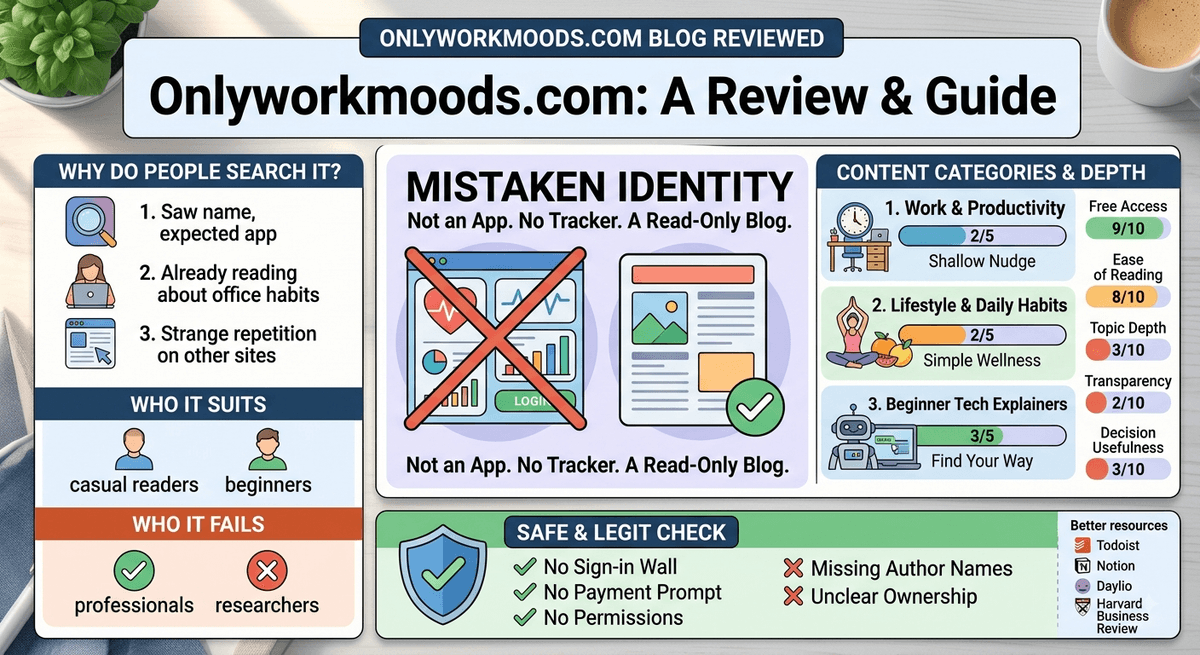
Search onlyworkmoods com and the results turn strange fast. A dozen near-identical explainers, heavy on hedging, thin on answers. Here is the plain version instead. Onlyworkmoods com is a blog. No dashboard, no mood tracker, no login screen. You read articles about work, daily habits and basic tech. That is the entire product.
What Is Onlyworkmoods Com?
Onlyworkmoods com is an online publisher of general informational articles. It is not software, and it does not track anything about you.
The name causes most of the confusion. Pair “work” with “moods” and it sounds like a morale tool for teams or an energy tracker for your day. Nothing like that exists on the site.
Think of a magazine on a screen. Posts get published. You read them and leave. Similar outlets take the same shape, including this general blog covering money, daily life and tech.
Why People Search Onlyworkmoods Com
Two groups make up most of the traffic. One saw the name somewhere and assumed an app sat behind it. The other was already reading about office habits or remote work when a page surfaced in search.
A third pattern deserves attention. Unrelated sites such as Mytecharm, Benzynews and Gizmocrunch published strikingly similar write-ups about this one address within weeks of each other. That repetition says more about how the pages were made than about the site itself.
What Onlyworkmoods Com Publishes
Content sits under three broad headings. Depth varies, but never by much.
Work and Productivity
Focus pointers, adjusting to remote setups, general career encouragement. Useful as a nudge, not as a plan.
Lifestyle and Daily Habits
Simple wellness ideas, eating suggestions, light fitness routines, household management. The same register you find on lifestyle-focused review sites and on blogs written in plain language for everyday readers.
Beginner Tech Explainers
What common digital tools do, what everyday online terms mean, how to find your way around. Newcomers get the most from these.
| Category | Depth Rating |
|---|---|
| Work and productivity | 2 / 5 |
| Lifestyle and habits | 2 / 5 |
| Beginner tech | 3 / 5 |
Depth by section, rated by this review after reading across all three categories.
Reading Experience On Onlyworkmoods Com
Navigation is simple. You will not get lost, and you will not be impressed either. It reads like a template blog: standard typefaces, stock photos, a layout you have seen many times.
Mobile reading works. Text loads, pages scroll, nothing breaks. App-level polish is absent.
Writing style is the strong part. No background knowledge is needed, and posts break into short blocks you can scan during a break. Depth is where it stalls. Articles say what a thing is, then stop before telling you why it matters or what to do next.
Is Onlyworkmoods Com Safe And Legit?
Nothing on the public pages points to bad intent. No sign-in wall, no payment prompt, no odd permission requests, no password to create.
The gaps are about openness rather than risk. Author names are missing. Ownership is unclear. Even the self-descriptions hedge. Compare that with how carefully a tech and lifestyle publication names its writers.
Ordinary caution still applies. Keep your browser updated, skip unrelated pop-ups, and treat unfamiliar domains with the same care you would give typo-based lookalike sites. Where a fact shapes a health or career decision, check it against a first-hand source first.
How Blogs Like Onlyworkmoods Com Make Money
Three revenue lines cover most sites of this build. Display ads pay per view or click. Affiliate links pay when a reader buys something mentioned. Raw traffic matters too, since covering many subjects widens the pool of searches that can land on a page.
None of that is dishonest. It explains why breadth beats depth, a pattern also visible across personal finance blogs and across sites reviewed for income claims that do not hold up.
Who Onlyworkmoods Com Suits
It works for casual readers filling ten minutes, and for beginners who want explanations without jargon.
It fails anyone expecting a mood or task app, professionals needing specialist depth, and researchers who need citable sources. Better places to go:
- Task and output tracking: Todoist or Notion
- Mood and habit logging: Daylio or Habitica
- Career guidance: Harvard Business Review or LinkedIn Learning
- Wellness reading: Verywell Mind or Healthline
Onlyworkmoods Com Review Verdict
| Criterion | Score |
|---|---|
| Free access | 9 / 10 |
| Ease of reading | 8 / 10 |
| Topic depth | 3 / 10 |
| Transparency | 2 / 10 |
| Decision usefulness | 3 / 10 |
Scores assigned by this review across five criteria.
This is a free, easy article site covering work, daily living and tech at a shallow level. Browsing it costs nothing and harms nothing. It will not replace a real productivity app or a specialist career resource. Read it lightly, and rely on stronger sources when the answer actually matters, the same way you would verify anything before handing over your login details.
FAQs
Is onlyworkmoods com an app?
No. Onlyworkmoods com is a read-only blog. It has no dashboard, no mood tracker, no habit logger and no account system, despite what the domain name suggests.
Is onlyworkmoods com safe to visit?
Going by publicly visible pages, yes. There is no sign-in requirement, no payment prompt and no unusual permission request. Normal browsing caution still applies to any unfamiliar site.
What topics does onlyworkmoods com cover?
Three areas: workplace productivity and career tips, daily lifestyle and wellness habits, and beginner-level technology explainers. Coverage stays broad and introductory across all three.
Can I trust onlyworkmoods com for research?
No. Articles carry no author names and no visible ownership details. Treat it as light reading and confirm anything important with a first-hand or specialist source.
Does onlyworkmoods com cost anything?
No. Every article is free and open. The site asks for no registration, no subscription and no card details at any point.