How to Generate Leads on Social Media

Maxime Dupré
8/6/2026

How to Generate Leads on Social Media
Social media can generate plenty of likes, comments, and followers, but engagement does not automatically translate into leads. People may interact with content without being ready to share their contact details or make a purchase.
In this guide, you will learn how to attract the right prospects, capture their information, qualify them based on fit and intent, and convert them into customers.
What Is Social Media Lead Generation?
Social media lead generation is the process of identifying potential customers on social platforms and encouraging them to share their contact information or express interest in an offer. A social media lead is more than a follower or someone who likes a post: they have taken a measurable action, such as submitting a form, downloading a resource, booking a demo, or starting a conversation.
Not all leads are equally ready to buy. Followers are part of your audience, while engaged users interact with your content. Marketing-qualified leads (MQLs) match your target profile and show stronger interest, and sales-ready leads demonstrate clear purchase intent. Tools such as Snov.io can help enrich and verify prospect data, organize leads, and create personalized follow-up campaigns that move social media contacts toward a sales conversation.
Why Use Social Media for Lead Generation?
Social media helps businesses reach prospects where they already discover, research, and compare brands. Detailed targeting options make it possible to focus on users based on their interests, job roles, demographics, and online behavior.
It also gives companies time to build trust through useful content and authentic interactions before starting a sales conversation. By combining organic content with paid campaigns, businesses can expand their reach, attract qualified prospects, and create a more consistent lead pipeline.
Build a Social Media Lead Generation Strategy
A successful strategy connects your target audience, conversion goal, and chosen social platforms. Before creating content or launching ads, define whom you want to reach, what action they should take, and where you are most likely to find them.
Define Your Ideal Customer Profile
Identify the characteristics of your best potential customers, including their industry, job role, needs, challenges, and buying behavior. This will help you create relevant content and attract prospects who are more likely to convert.
Set a Measurable Conversion Goal
Choose a specific action you want prospects to take, such as downloading a resource, joining a newsletter, completing a lead form, or booking a demo. Set measurable targets so you can evaluate and improve your results.
Choose the Right Platforms
Focus on the social networks your ideal customers use most actively. Consider each platform’s audience, content formats, targeting options, and user intent instead of trying to maintain an equal presence everywhere.
12 Ways to Generate Leads on Social Media
Effective social media lead generation requires more than posting regularly. The following tactics can help you attract relevant prospects, capture their interest, and move them toward a conversion.
1. Optimize Your Profiles for Conversions
Make it easy for visitors to understand what your business offers and what they should do next. Use a clear bio, relevant keywords, a strong value proposition, and a visible link to a landing page, lead magnet, or booking form.
2. Publish Educational, Problem-Solving Content
Create content that answers common questions and helps your audience solve specific problems. Guides, tutorials, checklists, and expert insights can demonstrate your expertise and attract prospects who are already interested in your field.
3. Create Platform-Specific Lead Magnets
Offer valuable resources in exchange for contact information. Adapt ebooks, templates, reports, or free tools to the format and audience of each platform instead of promoting the same offer everywhere.
4. Add Clear Calls to Action
Tell users exactly what action to take after viewing your content. Use direct calls to action such as downloading a guide, joining a webinar, requesting a quote, or booking a demo.
5. Use Native Lead Generation Forms
Platforms such as LinkedIn, Facebook, and Instagram allow users to submit their details without leaving the app. These forms reduce friction and can increase conversions, especially on mobile devices.
6. Host Webinars, Live Sessions, and Q&As
Live events give prospects a chance to learn from your team and interact with your brand directly. Require registration when appropriate and follow up with attendees after the event.
7. Start Conversations Through Comments and DMs
Respond to comments, answer questions, and use direct messages to continue relevant conversations. Focus on being helpful rather than sending an immediate sales pitch.
8. Practice Social Listening and Intent Monitoring
Track mentions, keywords, questions, and discussions related to your product or industry. This can help you identify users who are actively looking for advice or considering a solution.
9. Build Communities and Participate in Niche Groups
Create or join groups where your target audience discusses common challenges. Contribute useful insights consistently to build credibility and generate interest in your business.
10. Partner With Creators and Industry Experts
Collaborate with trusted voices who already have access to your target audience. Webinars, interviews, reviews, and co-created content can expand your reach and strengthen credibility.
11. Run Targeted and Retargeting Ads
Use paid campaigns to reach users based on their interests, roles, behavior, or previous interactions with your brand. Retargeting can bring back prospects who visited your website or engaged with your content but did not convert.
12. Combine Social Engagement With Personalized Email Outreach
Move promising social media contacts into a more structured follow-up process. Use what you know about their interests and interactions to create relevant, personalized email messages instead of generic outreach.
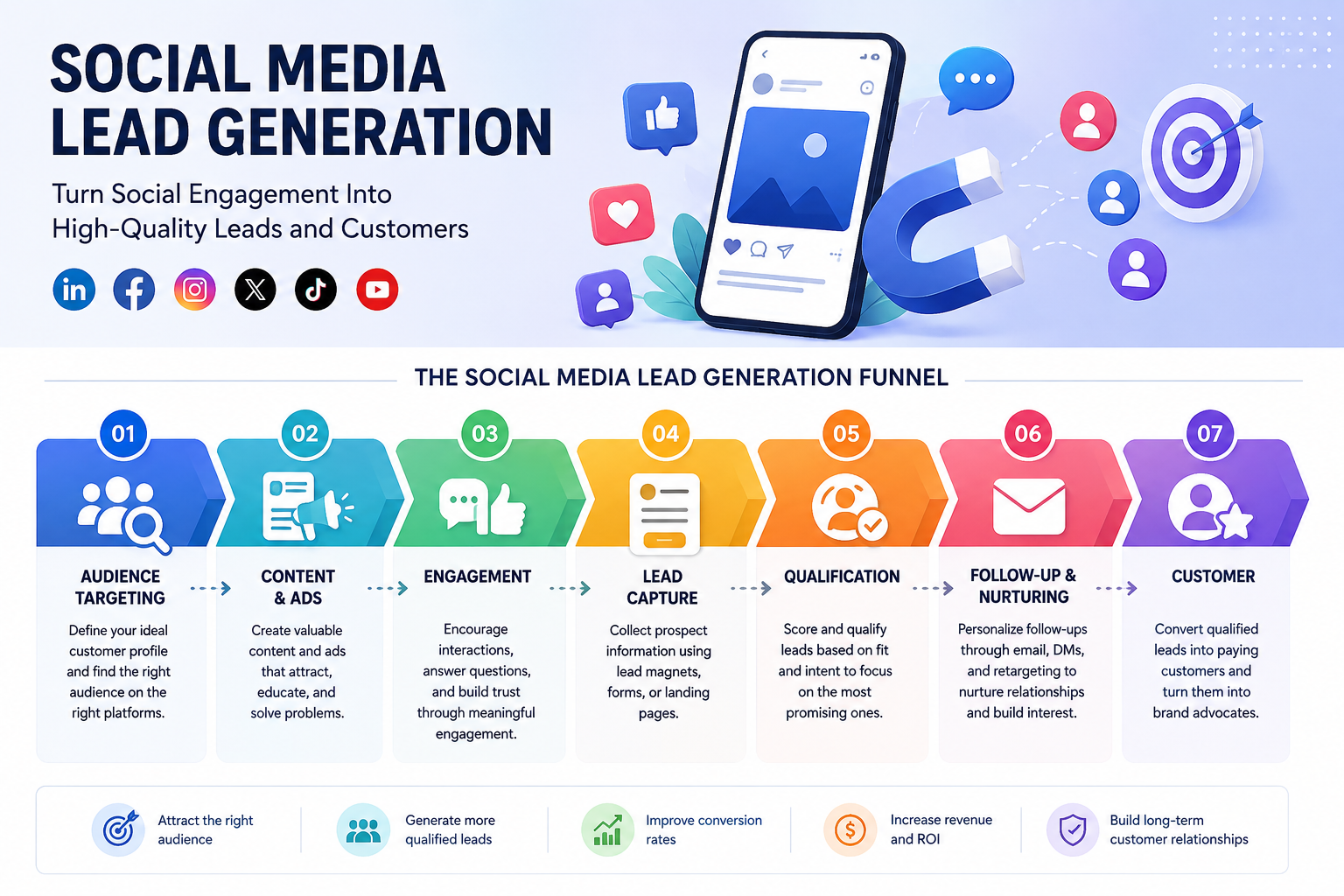
How to Qualify and Nurture Social Media Leads
Generating contact information is only the beginning. To turn social media leads into customers, businesses need to identify the most promising prospects and guide them through relevant, timely follow-ups.
1. Capture Relevant Prospect Information
Collect the details needed to understand and contact each lead, such as their name, work email, company, job role, interests, and the content or campaign that generated the conversion. Avoid requesting unnecessary information that could make forms harder to complete.
2. Score Leads by Fit and Intent
Evaluate leads based on how closely they match your ideal customer profile and how strongly their actions suggest buying intent. For example, requesting a demo may indicate greater readiness than simply following your account or downloading introductory content.
3. Personalize Follow-Ups
Use the prospect’s role, interests, challenges, and previous interactions to make follow-up messages relevant. Reference the content they engaged with and offer a logical next step instead of sending the same sales message to every lead.
4. Connect Social, Email, and CRM Workflows
Sync lead data and interactions across your social platforms, email tools, and CRM. A connected workflow helps teams avoid duplicate outreach, maintain complete prospect records, and continue each conversation through the most appropriate channel.
Common Social Media Lead Generation Mistakes
Even a well-planned campaign can underperform when businesses focus on activity instead of the complete lead journey.
Chasing vanity metrics: Likes, views, and follower counts may indicate reach, but they do not prove that a campaign is generating qualified leads.
Using the same content on every platform: Audiences, formats, and user behavior differ across social networks, so content should be adapted accordingly.
Sending generic sales messages: Impersonal outreach gives prospects little reason to respond and can damage trust.
Failing to follow up quickly: Delayed responses allow interested prospects to lose interest or choose a competitor.
Collecting leads without nurturing them: Most prospects are not ready to buy immediately and need relevant content and follow-ups before making a decision.
Avoid these mistakes by connecting every campaign to a clear conversion goal, tailoring communication to each platform, and creating a structured follow-up process.
Conclusion
Generating leads on social media is not about waiting for a post to go viral. Sustainable results come from building a repeatable system that attracts the right audience, captures prospect information, qualifies leads, and supports them with timely follow-ups.
Continue testing platforms, content formats, offers, calls to action, and outreach workflows. Use performance data to improve each stage and focus your resources on the channels and tactics that consistently produce qualified leads and customers.