Does Social Proof Really Help TikTok Follower Growth?

Maxime Dupré
8/13/2026
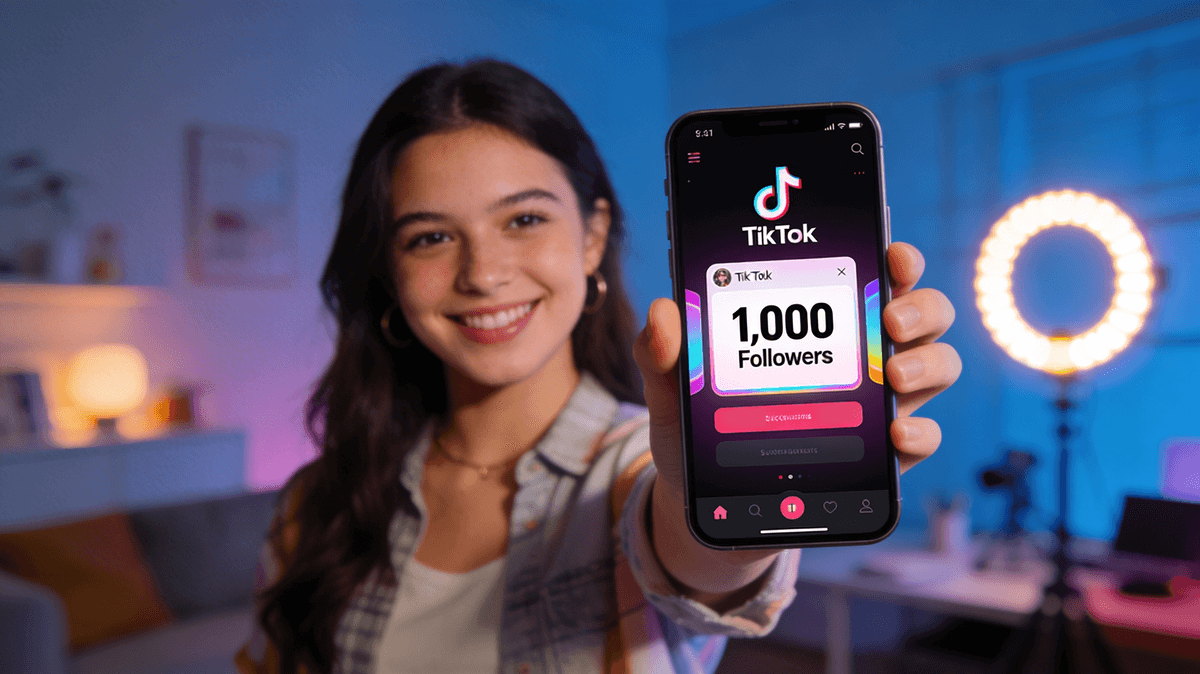
Every creator has heard the line: “people follow accounts that already have followers.” It sounds obvious, and it is repeated in every growth guide, and yet almost none of those guides actually walk through what the evidence says. Social proof does move the needle on TikTok in 2026, but not in the way the surface advice implies. The effect is real, it is measurable, and it works within a specific window. Outside that window, adding social proof to an account is a waste of budget.
This piece unpacks how the mechanism actually works on TikTok specifically, when it earns a real return, and when it just moves numbers around without moving the account.
What social proof means on TikTok specifically
On most platforms social proof is a single number: the follower count on your profile. On TikTok the picture is more layered. A first time viewer landing on your profile from the For You Page reads three signals before deciding whether to tap follow. The first is the follower to following ratio. The second is the like count on the pinned video or the top video visible in the grid. The third is the average view count across the last three videos.
All three are visible within a second of landing on the profile. The ranking system does not weight them directly, but the human decision to follow does, and that decision is what determines whether the FYP traffic converts into repeat exposure. Social proof on TikTok is not one number to inflate. It is a set of surface signals that either match the account’s actual content quality or do not.
The science behind the effect
The behavioural mechanism is called informational cascade, and it is one of the most consistently replicated results in social psychology. When people are uncertain, they use the choices of others as a shortcut. A profile with 20,000 followers gets more follows from cold viewers than the same profile with 200 followers, even when the content is identical, because the higher number signals that other people have already made the decision.
The size of the effect is not trivial. Studies of platform behaviour across Instagram, TikTok, and YouTube show conversion lifts in the range of 20% to 60% when profile-level social proof is above the viewer’s mental threshold for a credible account. On TikTok specifically, that threshold sits around the 10,000 follower mark for general content and closer to 3,000 to 5,000 for niche verticals where audiences expect smaller accounts.
How the FYP algorithm weights early signals
The algorithm itself does not care how many followers you have when it decides whether to push a video. Distribution on TikTok is video first, and a brand new account with a strong first video will out-reach an established account posting a weak one. What the algorithm does care about is engagement velocity: how fast likes, saves, shares, and completions accumulate in the first 90 minutes.
This is where social proof feeds back into distribution indirectly. A profile that converts more FYP viewers into follows earns a compounding advantage because those new followers become the first audience for the next video, which lifts the early engagement velocity, which triggers a wider push. The profile-level social proof does not go through the ranking model, but the follower conversion it drives absolutely does.
When paid social proof works and when it does not
The debate around paid follower packages usually collapses into a yes or no, and both answers are wrong. Paid social proof works when three conditions are met simultaneously: the account already produces content that would deserve reach on its own, the delivered followers come from an active account pool that survives platform audits, and the volume added is proportional to the account’s current baseline.
Where paid proof fails is when a stalled account with weak content adds a large follower package hoping the number itself will trigger growth. The number does nothing without content that converts the viewers those followers eventually attract, and cheap follower packages collapse in the first platform sweep, leaving the account visibly lower than it was.
The working pattern most established creators now use is smaller, retention focused. A creator with 4,000 real followers looking to cross the 10,000 credibility threshold adds a package sized to close the gap, sourced from active accounts that hold up at day 30. Done correctly with high-retention TikTok followers through Famety, the follower count crosses the credibility threshold, the FYP-driven follow conversion rate lifts, and organic growth compounds on top of the base.
Signals that outperform raw follower count
If the goal is faster follower growth, the raw count is not always the highest leverage lever. Three other signals often move the needle harder.
Pinned video view count. A profile with a pinned video sitting at 300,000 views communicates credibility faster than a moderate follower count. Cold visitors read that number before they read the follower total.
Average likes on the last three videos. A creator with 8,000 followers whose recent videos are pulling 4,000 likes each looks stronger than a creator with 40,000 followers whose recent videos are pulling 300. The engagement ratio is the actual health indicator.
Comment activity. A profile where recent videos have active comment sections signals a real audience. This is why some creators focus their paid growth on comment volume rather than follower count when the account is early stage.
The 48 hour social proof window nobody talks about
Almost every social proof article talks about the effect as if it were constant. It is not. The effect concentrates in a specific window, and outside it, the return drops sharply.
The window is the first 48 hours after a video hits the For You Page in volume. In that period, a spike in profile visits arrives from viewers who watched the video and want to see who made it. Whatever social proof exists on the profile at that moment shapes their decision. Two days later, the FYP push is over, the visitor volume drops, and the follower count no longer converts at the same rate because there is nobody looking.
The practical implication is that the timing of any social proof adjustment matters more than the size of it. Adding followers to a dormant profile is low return. Adding followers to a profile that just had a video break out is high return because the boosted count catches an existing traffic wave rather than sitting idle.
Beyond followers: the two additions that lock in momentum
Follower count on its own is one of the three profile-level signals, and adjusting it alone leaves the other two unchanged. Creators who want the strongest possible profile at the moment of an FYP breakout usually adjust two signals in parallel.
The first is per video like volume. Backing the video that broke out with additional increase TikTok likes in the same 48 hour window keeps the video visible to a wider FYP audience, which extends the traffic wave to the profile.
The second is cross platform reinforcement. If the content lives on Instagram Reels in parallel, layering high-retention Instagram likes from active accounts on the Reels cut catches the second-order traffic that arrives when a viewer looks up the creator on the other platform. Running both from the same dashboard through Famety is what most creators serious about the compounding effect do by default now.
Frequently asked questions
Does social proof actually cause follower growth on TikTok, or is it a coincidence? The causal effect is documented across multiple platform studies. Profiles above the credibility threshold for their niche convert cold FYP visitors into followers at a measurably higher rate than identical profiles below it.
How many followers does an account need before social proof stops mattering? Around 100,000 for general content, later for niche verticals. Above that number the marginal effect of adding more flattens because viewers already read the account as established.
Do paid followers actually help or hurt the algorithm? Neither directly. The ranking algorithm distributes videos first and reads profile signals second. The follower count affects the human decision to follow, not the machine decision to distribute. Paid followers help when they are retention grade and hurt when they collapse under the next audit.
Is there a wrong time to add social proof to an account? Adding it to a dormant account with no active videos is low return, because there are no visitors for the count to convert. Adding it in the 48 hours after a breakout video is where the effect is strongest.