An AI ASMR Account Hit Nearly 200,000 Followers in 10 Days. Human Creators Are Watching Closely.

Maxime Dupré
7/22/2026
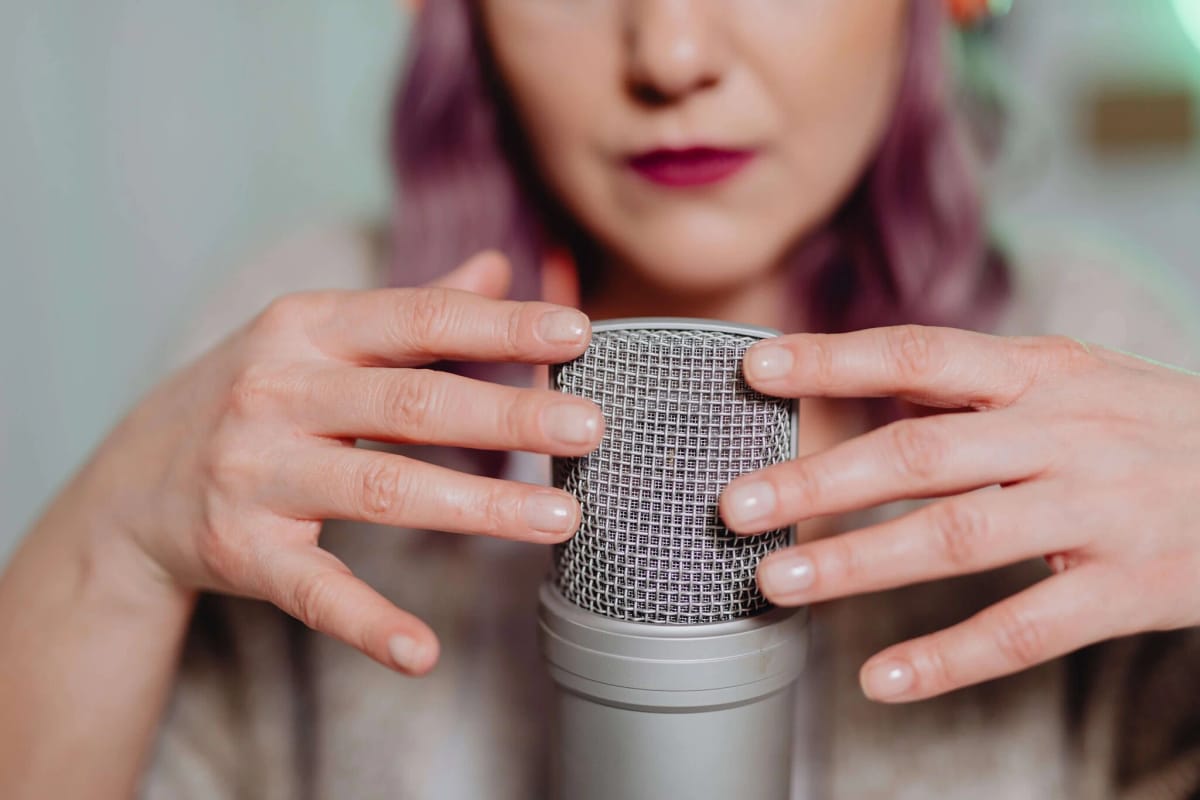
An AI ASMR Account Hit Nearly 200,000 Followers in 10 Days. Human Creators Are Watching Closely.
Synthetic whisper videos — glass fruit, molten-lava mukbangs — flooded feeds in 2025, built entirely from AI voice and video tools. The people who spent a decade building ASMR by hand now have a competitor that never sleeps.
In June 2025, a TikTok account called @impossibleais began posting AI-generated ASMR. Within roughly ten days it had pulled in millions of views and nearly 200,000 followers, Fast Company reported. It had made none of it with a microphone.
That account wasn’t an outlier. It was an early symptom of the first content genre to go fully synthetic at scale — voice, visuals and sound effects, all generated from text prompts. The wave arrived fast, it’s cheap to produce, and it landed directly on top of a category that human creators had spent more than a decade building whisper by whisper.
The question underneath the glass-fruit videos is a serious one for anyone in audio: what happens to the human ASMR creators, and to the business they built?
The overnight genre
The engine behind the trend is Google’s Veo 3 video model, which debuted in March 2025 and made hyper-real, physically impossible clips trivial to generate, per Fast Company. A knife slicing a crystalline glass watermelon; a creator eating a glowing bowl of lava like honey; a bite taken out of a cinnamon bun made of glass — the format fused two proven triggers, “oddly satisfying” visuals and crisp trigger sounds, into an endlessly remixable loop.
The growth curves were the story. One account profiled by The Express Tribune racked up 82,000 followers three days after starting, with just 11 videos. A single lava clip hit 2.8 million views, according to Fast Company. And the barrier to entry collapsed: a creator now needs a text prompt and a subscription, not a soundproofed room and a $400 binaural microphone. Predictably, other creators are already selling paid courses on how to make the stuff.
What AI still can’t fake
Here’s the catch that keeps human creators in the game.
ASMR works on a strange, specific mechanism: the tingling response tends to fire on cues of intimacy and attention — soft breath, uneven pacing, tiny mouth sounds, the sense that a real person is quietly focused on you. Those micro-imperfections are the trust signals. AI, trained to optimize, tends to smooth them away, which is why so much synthetic ASMR reads as impressive and faintly unsettling at once — hyper-real to look at, but hollow where the human warmth should be.
That gap matters commercially, because the AI wave is mostly visual “satisfying” content — a cousin of ASMR, not a replacement for the whisper-and-personal-attention material that built the genre’s most loyal audiences. A glass-fruit loop is a magic trick. A 40-minute soft-spoken sleep session is a relationship. So far, only one of those is easy to synthesize.
The human ASMR economy
That distinction is the whole business model. Human ASMR creators don’t primarily earn from passive views; they earn from connection — the paid, personal, one-to-one attention that a viral loop can’t replicate.
The subscription data makes the point bluntly. In an analysis of more than a million subscribers, messages drove 69.74% of all creator revenue, Yahoo Finance reported, citing OnlyGuider — meaning the money lives in direct, personal interaction, not in the feed. And the audience paying for it is large: US fans alone spent an estimated $2.63 billion on the platform in 2025, according to AOL, citing the same source.
That’s the layer synthetic content can flood but not yet own. It’s also why discovery tools index the niche directly rather than lumping it in with generic video — OnlyGuider, for instance, keeps a running directory of ASMR content creators, organized around exactly the personal-attention category the AI clips gesture at but don’t provide. For a human creator, being findable inside that category is the difference between a viral moment and a subscriber base.
The caveats
A few worth keeping in view. TikTok follower and view counts are platform vanity metrics, not audited figures, and a format that explodes in ten days can fade in twenty — novelty ASMR trends have burned out before. The AI wave is also concentrated in short, visual “satisfying” clips; whether it ever migrates convincingly into long-form, voice-led ASMR is an open question, not a settled outcome. And OnlyGuider’s spending figures are estimates modelled from search and financial data, not a transaction ledger.
What the numbers do show is a genre splitting in two: a synthetic tier optimized for the scroll, and a human tier built on attention someone actually pays. They increasingly compete for the same feed. They are not yet selling the same thing.